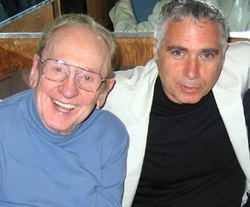
Les Paul, who died Thursday at the age of 94, had the unique distinction of creating a guitar so iconic, millions thought “Les Paul” the name of a guitar, not a man.
This was dramatized in a Coors TV commercial I wrote and created for Les Paul in 1997. A swaggering young guitar player noodles a blues riff when he is approached by an older man asking to see the guitar. With contempt, the guitar player asks: “You play?” “I’ve been known to,” is the old man’s sweet reply, and taking up the guitar, he proceeds to unleash a dazzling flurry of notes. The stunned young man nods in admiration and asks his name. “It’s on your guitar,” replies the older man, and the camera freezes on the Les Paul logo. Then the shock of recognition on the face of the guitar player.
Les thought this commercial resurrected his career, but that was totally untrue. He gave out guitar picks that said on one side: “What’s my name?” and on the other: “It’s on your guitar.” He said of it from the stage (because he was an old time comedian as much as he was a guitar wizard): “That commercial didn’t sell much beer, but it sure sold a hell of a lot of guitars.” This was much closer to the truth.
The arthritis that would eventually ravage the golden hands and allow him but a note or two at a time, was already at work during the shooting of the commercial, and in post production it was decided Les’s solo was not clean enough for air. We looped in a guitar player from LA who imitated Les’s style and synchronized with his fingers. It fell to me to tell Les, and though he had become almost like a father to me, I approached the call like a man going to his doom.
“Les, the director and everyone think the solo isn’t working,” I told him, shifting the blame a bit. “We had to loop in another player on your part.”
There was silence on the line. Then his voice, ever bawdy, came booming through: “You saved my f——g ass!”
Over the years, I’d show up backstage at the Iridium where he played every Monday until he was 94, like a prodigal son returning to a father he had neglected. “Where the hell you been?” was his continual bark, but I think he was just being flattering. I’d sit beside him in the trashy dressing room that opened onto the toilet and help him brush his hair, arrange his hearing aids, or tell him when the band was onstage and it was time to go on. I’d also sit beside him for endless hours as the sea of humanity came to pay homage. They were septugenarians reminiscing of the Les Paul and Mary Ford hits of the early fifties that dominated the Eisenhower airwaves until rock n roll killed that world of music loudly and permanently. They were guitar players from Japan and Borneo and Pittsburgh and Sweden, all genuflecting at the altar of the man who once long ago said: “You can’t hear the goddamn guitar in the band. Let’s electrify it.”
Through all the years, I never saw Les fail to utter a kind word to any fan, or refuse any request for an autograph, not through all the arthritis and ailments and bypasses. In his words, he “made the show work” with humor, habit, and guests that were occasionally of star quality but more often reminders of the Amateur Hours of the forties and fifties. The show was the same set of jazz standards year after year, and the same jokes, over and over again. Flirting with the buxom but kittenish female bass player Nikki he would turn to the audience and say: “I feel like a condemned building with a new flagpole.”
I dreamed of writing a book with Les. It would be called “Guitar Players. By Les Paul,” which I told him would be a little like a book called “Life. By God.” Les Paul knew, inspired and was inspired by every guitar player from Eddie Lang to Charlie Christian to Django Reinhardt to Jimi Hendrix to Joe Pass to Wes Montgomery to Jeff Beck. I saw this book as inevitable, mandatory, Les’ profile of every player: anecdotally, biographically and musically. We got many hours on tape, but I could never get him to focus. There were always museums to set up and Hall of Fame nights to celebrate and medical procedures and periods of retreat at home in Mahwah between the Monday night shows. And, perhaps, my own insufficient resolve.
In the car returning from the TV shoot in Colorado one night, a night whose like I knew would never quite come again, he spoke in one unbroken stream about his experiences with President Roosevelt, Bing Crosby, Elvis Presley, Jimi Hendrix, Fred Waring, Paul McCartney, Count Basie, Judy Garland and Slash. He uttered a truly amazing statement about my lifelong idol Bob Dylan. “He can’t play the harmonica, but he’s a f—-g interesting guy.”
He had injured himself on the plane ride out to the shoot, and I went with him to a local hospital to get bandaged. He signed the paperwork with the name he never legally changed: Lester Polfuss, and to the nurse thought he was just an 81-year old man named Lester. And in a sense, that’s what he was.
“There are only two kinds of music,” he told me in the waiting room. “Good and bad.”
This was dramatized in a Coors TV commercial I wrote and created for Les Paul in 1997. A swaggering young guitar player noodles a blues riff when he is approached by an older man asking to see the guitar. With contempt, the guitar player asks: “You play?” “I’ve been known to,” is the old man’s sweet reply, and taking up the guitar, he proceeds to unleash a dazzling flurry of notes. The stunned young man nods in admiration and asks his name. “It’s on your guitar,” replies the older man, and the camera freezes on the Les Paul logo. Then the shock of recognition on the face of the guitar player.
Les thought this commercial resurrected his career, but that was totally untrue. He gave out guitar picks that said on one side: “What’s my name?” and on the other: “It’s on your guitar.” He said of it from the stage (because he was an old time comedian as much as he was a guitar wizard): “That commercial didn’t sell much beer, but it sure sold a hell of a lot of guitars.” This was much closer to the truth.
The arthritis that would eventually ravage the golden hands and allow him but a note or two at a time, was already at work during the shooting of the commercial, and in post production it was decided Les’s solo was not clean enough for air. We looped in a guitar player from LA who imitated Les’s style and synchronized with his fingers. It fell to me to tell Les, and though he had become almost like a father to me, I approached the call like a man going to his doom.
“Les, the director and everyone think the solo isn’t working,” I told him, shifting the blame a bit. “We had to loop in another player on your part.”
There was silence on the line. Then his voice, ever bawdy, came booming through: “You saved my f——g ass!”
Over the years, I’d show up backstage at the Iridium where he played every Monday until he was 94, like a prodigal son returning to a father he had neglected. “Where the hell you been?” was his continual bark, but I think he was just being flattering. I’d sit beside him in the trashy dressing room that opened onto the toilet and help him brush his hair, arrange his hearing aids, or tell him when the band was onstage and it was time to go on. I’d also sit beside him for endless hours as the sea of humanity came to pay homage. They were septugenarians reminiscing of the Les Paul and Mary Ford hits of the early fifties that dominated the Eisenhower airwaves until rock n roll killed that world of music loudly and permanently. They were guitar players from Japan and Borneo and Pittsburgh and Sweden, all genuflecting at the altar of the man who once long ago said: “You can’t hear the goddamn guitar in the band. Let’s electrify it.”
Through all the years, I never saw Les fail to utter a kind word to any fan, or refuse any request for an autograph, not through all the arthritis and ailments and bypasses. In his words, he “made the show work” with humor, habit, and guests that were occasionally of star quality but more often reminders of the Amateur Hours of the forties and fifties. The show was the same set of jazz standards year after year, and the same jokes, over and over again. Flirting with the buxom but kittenish female bass player Nikki he would turn to the audience and say: “I feel like a condemned building with a new flagpole.”
I dreamed of writing a book with Les. It would be called “Guitar Players. By Les Paul,” which I told him would be a little like a book called “Life. By God.” Les Paul knew, inspired and was inspired by every guitar player from Eddie Lang to Charlie Christian to Django Reinhardt to Jimi Hendrix to Joe Pass to Wes Montgomery to Jeff Beck. I saw this book as inevitable, mandatory, Les’ profile of every player: anecdotally, biographically and musically. We got many hours on tape, but I could never get him to focus. There were always museums to set up and Hall of Fame nights to celebrate and medical procedures and periods of retreat at home in Mahwah between the Monday night shows. And, perhaps, my own insufficient resolve.
In the car returning from the TV shoot in Colorado one night, a night whose like I knew would never quite come again, he spoke in one unbroken stream about his experiences with President Roosevelt, Bing Crosby, Elvis Presley, Jimi Hendrix, Fred Waring, Paul McCartney, Count Basie, Judy Garland and Slash. He uttered a truly amazing statement about my lifelong idol Bob Dylan. “He can’t play the harmonica, but he’s a f—-g interesting guy.”
He had injured himself on the plane ride out to the shoot, and I went with him to a local hospital to get bandaged. He signed the paperwork with the name he never legally changed: Lester Polfuss, and to the nurse thought he was just an 81-year old man named Lester. And in a sense, that’s what he was.
“There are only two kinds of music,” he told me in the waiting room. “Good and bad.”
 RSS Feed